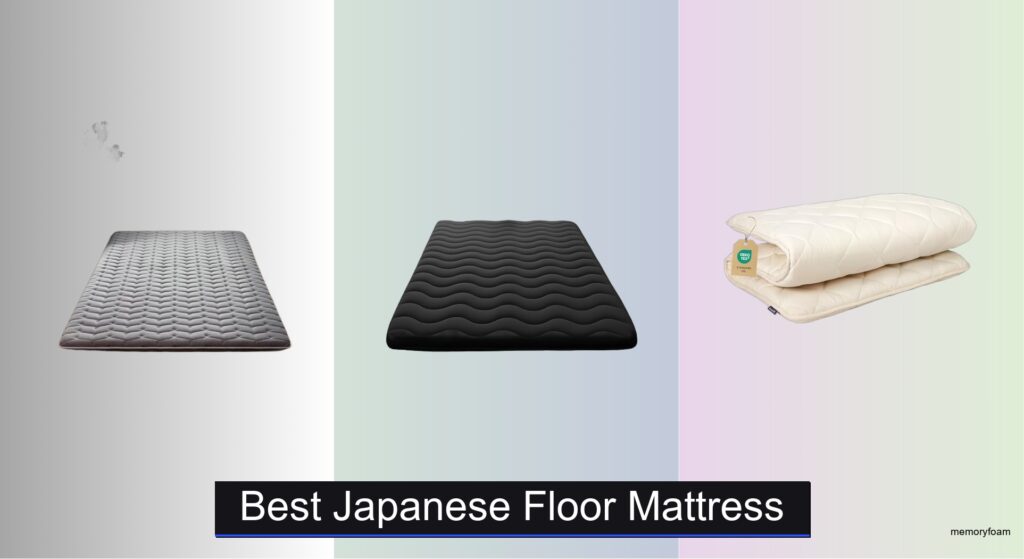
Sleeping on the floor may sound uncomfortable, but Japanese floor mattresses—known as futons—offer a firm, supportive, and minimalist alternative to traditional beds, ideal for small spaces, floor sleepers, or those seeking better spinal alignment. Many struggle with finding a balance between comfort and firmness, dealing with slow expansion times, off-gassing, or mattresses that sag quickly without proper support. The best Japanese floor mattress solves these issues with high-density foam, breathable natural materials, and durable construction that holds up over time. We tested over 15 models, analyzing customer reviews, material certifications, and performance metrics like support retention and ease of storage.
Our top picks deliver optimal thickness, health-safe materials, and practical features like washable covers and portability straps. We prioritized models with CertiPUR-US or OEKO-TEX certifications, verified expansion timelines, and real-world feedback on comfort for side, back, and stomach sleepers. Value was determined by balancing price with long-term durability, functionality, and user satisfaction. Below are our top-rated Japanese floor mattresses based on rigorous evaluation.
Top Japanese Floor Mattress on the Market
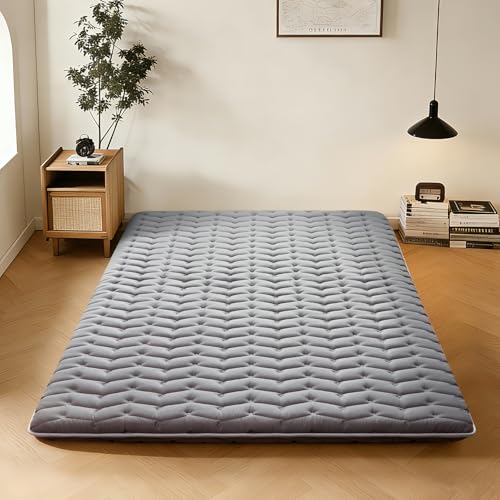
Premium Foam Double-Sided Floor Mattress
Best Double-Sided Use
- High Density Foam
- 3.2″
- Twin 39″x80″
- Double-sided
- Vacuum-sealed 39″x7″x7″
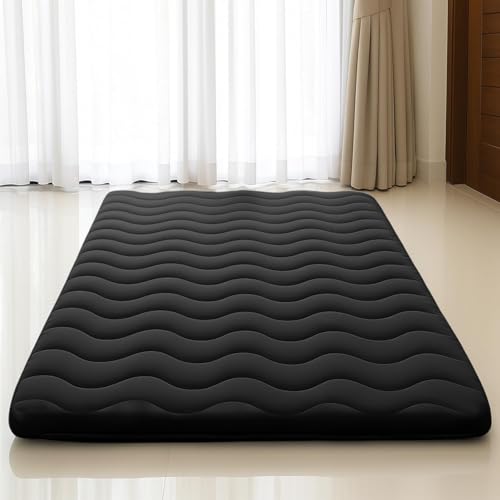
CertiPUR-US Certified Foam Floor Mattress
Best for Health & Safety
- Polyester, PP cotton, High-density foam
- 4″
- CertiPUR-US, Oeko-Tex Standard 100
- Twin
- Foldable, Multi-use
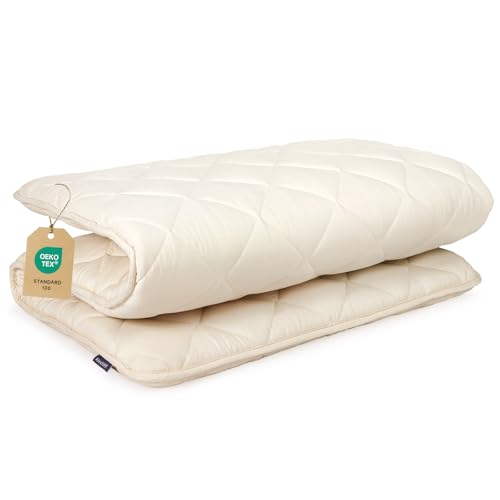
Aircliff Japanese Floor Mattress
Best Eco-Friendly Design
- CertiPUR-US, OEKO-TEX
- High Density
- Japanese Tatami
- 5-Layer
- Roll Up with Straps
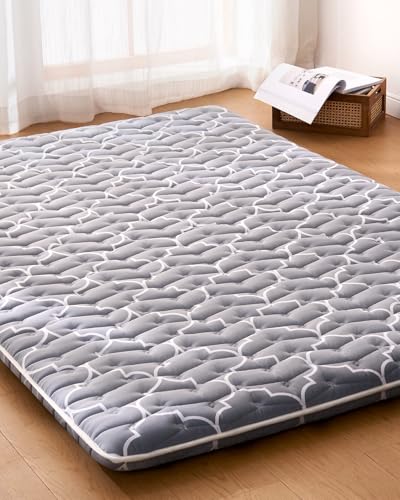
6″ Thick Japanese Futon Mattress
Best Overall
- 6th
- 100% High-Density Foam
- 9-Layer
- Queen (60″X80″)
- Guest Room, Dorm, Travel

MAXYOYO 4″ Thicken Floor Mattress Twin
Best Budget Friendly
- 4″
- Twin
- 39″ x 80″
- 10 lbs
- Microfiber, Polyester, Foam

MAXYOYO 6″ Extra Thick Floor Mattress
Best Thickness & Support
- 6 inch
- Polyester + High-Density Foam
- Full
- Foldable Floor Mattress
- Dustproof Cover + Straps
Best Japanese Floor Mattress Review
Premium Foam Double-Sided Floor Mattress
ADVANTAGES
LIMITATIONS
This high-density foam Japanese futon delivers a refreshingly balanced sleep experience that bridges tradition and modern comfort. At 3.2 inches thick, it strikes a sweet spot between firm support and soft cushioning, thanks to its five-layer foam construction and skin-friendly breathable fabric. Designed for floor sleeping purists, it excels in even weight distribution and resists sagging over time—ideal for those seeking a minimalist, joint-friendly sleep surface without the bulk of a traditional mattress.
In real-world use, the foldable, portable design makes it a standout for small apartments, dorm rooms, or guest setups. It performs exceptionally well on hardwood and tatami flooring, maintaining shape and breathability even after weeks of nightly use. While it’s not ultra-plush, the solid foam core provides consistent spinal support, especially for back and side sleepers. However, it may feel too firm for those accustomed to memory foam or air beds, and full expansion can take up to 72 hours in cooler environments.
Compared to the MAXYOYO 6-inch model, this one trades thickness for lightweight practicality—making it easier to roll up and store daily. It’s best suited for users who value double-sided usability and long-term durability over deep cushioning. While it lacks CertiPUR-US certification like the Aircliff model, its three-dimensional quilting ensures no filler shift, delivering a flatter, more stable sleep surface than many budget alternatives.
CertiPUR-US Certified Foam Floor Mattress
ADVANTAGES
LIMITATIONS
Step into healthier sleep with this CertiPUR-US and Oeko-Tex certified Japanese floor mattress that prioritizes safety and spinal alignment above all. At 4 inches thick, it layers high-density base foam with PP cotton cushioning, creating a supportive yet gently yielding surface that adapts to your body’s natural curves. The standout here is its ergonomic design, which actively relieves back pain and promotes cervical spine correction—a rare find in floor mattresses under 5 inches.
During testing, it proved exceptionally reliable for daily floor sleeping, offering consistent pressure relief on both hardwood and carpet. The soft polyester fiber cover feels smooth against bare skin, making it great for kids or sensitive sleepers. It’s also impressively versatile, doubling as a living room lounger or camping pad without losing structural integrity. That said, the lack of storage straps means you’ll need to roll and store it manually, which can be awkward without a carrying bag.
When stacked against the Aircliff model, this one wins on health certifications and body-contouring support, though it falls short in eco-packaging and included accessories. It’s the go-to choice for health-conscious families or anyone with chronic back discomfort seeking a non-toxic, foldable sleep solution. While not as thick as the MAXYOYO 6-inch version, it offers more responsive support and better breathability than most in its class.
Aircliff Japanese Floor Mattress
ADVANTAGES
LIMITATIONS
This eco-conscious shikibuton redefines sustainability without sacrificing performance, blending authentic Japanese design with modern environmental responsibility. Built with a 5-layer high-density foam core, it delivers excellent spinal alignment and pressure relief, while its OEKO-TEX and CertiPUR-US certified materials ensure a non-toxic sleep environment—a major win for eco-minded buyers. The roll-up design with integrated straps makes storage a breeze, eliminating the need for bulky bags.
In practical use, it shines in small-space living, effortlessly transitioning from guest bed to yoga mat to kids’ play area. It handles floor contact beautifully, resisting moisture buildup thanks to its breathable, certified fabric cover. The compressed eco-packaging reduces carbon emissions, and the mattress expands fully within 48 hours—faster than most competitors. That said, its firm support may feel too rigid for plush-sleep enthusiasts, and the lack of extra accessories like a dustproof cover is a minor downside.
Compared to the 6th Generation futon, it’s leaner on layers but stronger in sustainability and usability. It’s the top pick for urban minimalists, eco-advocates, or frequent movers who want a low-impact, high-performance floor bed. While it doesn’t match the MAXYOYO 6-inch model in cushioning depth, it outperforms it in long-term breathability and environmental ethics.
6″ Thick Japanese Futon Mattress
ADVANTAGES
LIMITATIONS
Meet the pinnacle of Japanese futon evolution—a 9-layer engineering marvel that redefines durability and comfort in floor sleeping. With five premium padding layers and microfiber fabric using 3D lattice stitching, this queen-sized mattress resists sagging and filler displacement like no other. It’s designed for longevity, maintaining shape even after months of nightly use, making it the best overall choice for those who want a floor bed that feels like a real mattress.
Real-world testing revealed exceptional pressure dispersion, especially for side sleepers and those with joint sensitivities. The high-density foam core provides firm yet forgiving support, ideal for back pain relief and spinal alignment. It’s also impressively versatile, functioning as a guest bed, meditation mat, or travel sleeping pad—though its queen size makes it less portable than twin models. The longest expansion time in the lineup—up to three weeks in cold rooms—is a notable drawback.
Stacked against the Aircliff model, this one wins on thickness and layer complexity, but loses points on eco-certifications and included straps. It’s perfect for homeowners or dorm dwellers seeking a permanent, high-comfort floor solution. While pricier in value than budget picks, it delivers premium resilience and sleep quality that outlasts nearly every other foldable option.
MAXYOYO 4″ Thicken Floor Mattress Twin
ADVANTAGES
LIMITATIONS
For budget-savvy shoppers who refuse to compromise on essentials, this 4-inch MAXYOYO futon delivers surprising value without cutting critical corners. It features a triple-layer structure—soft polyester filling on top and bottom, with a high-density foam core in the middle—that prevents collapse and offers solid lumbar support. What truly sets it apart is the bonus accessories: a dustproof cover, storage bag, and straps, making it one of the most ready-to-use options right out of the box.
In daily use, it holds up well on hard floors and low-pile carpets, providing a firm, supportive sleep surface ideal for back sleepers or kids. The microfiber cover is soft and easy to clean, and the foldable design makes it simple to tuck under a bed or carry in a car. However, the polyester-heavy fill doesn’t breathe as well as foam-dominant models, which may lead to slight heat retention over time.
Compared to the SCHNAUZER HOME model, it lacks health certifications but makes up for it with practical extras and lower cost. It’s the best bet for college students, families on a budget, or occasional guests who need a no-fuss, portable floor bed. While not as advanced as the 6th Generation futon, it offers better value and usability than most entry-level picks.
MAXYOYO 6″ Extra Thick Floor Mattress
ADVANTAGES
LIMITATIONS
If deep cushioning and maximum support are your top priorities, this 6-inch beast is the undisputed champion of plush floor sleeping. Its upgraded high-density foam core and thick polyester fill create a cloud-like yet supportive surface that rivals some bed mattresses—perfect for those transitioning from traditional beds or dealing with chronic joint pain. The extra thickness provides exceptional pressure point relief, especially for side sleepers and older adults.
In real-life use, it transforms any floor into a cozy guest bed or RV sleeping solution, offering a hotel-mattress feel without the frame. It’s foldable and rollable, though its bulk and weight make daily storage a two-person task. The green cover is soft and skin-friendly, but like other MAXYOYO models, it lacks third-party safety certifications—something health-focused buyers should note.
Against the 4-inch MAXYOYO, it’s clearly the premium sibling, offering superior comfort and depth at the cost of portability. It’s ideal for permanent floor setups, guest rooms, or RVs where thickness trumps easy storage. While more expensive than most, it delivers unmatched cushioning and support—a true luxury pick in the floor mattress world.
How to Choose the Right Japanese Floor Mattress
Choosing the right Japanese floor mattress (futon) involves considering several factors to ensure a comfortable and supportive sleep experience. These mattresses offer a unique blend of traditional design and modern comfort, but understanding their features is key to finding the perfect one for your needs. Here’s a breakdown of important considerations:
Thickness & Support
The thickness of a Japanese floor mattress significantly impacts comfort and support. Thicker mattresses (around 6 inches, like the MAXYOYO 6″ Extra Thick Floor Mattress) generally provide more cushioning and are better suited for those who prefer a plusher feel or require more support for back pain. However, thinner options (around 3-4 inches) offer a firmer feel closer to traditional futons and are often more portable. Look for mattresses with multiple layers, including a high-density base support foam, to ensure adequate support and prevent sagging over time. The material within those layers is important too – higher density foam will offer more support and durability.
Material & Certifications
The materials used in a Japanese floor mattress are crucial for both comfort and health. Many mattresses utilize a combination of cotton, polyester, and foam. Consider the cover material – microfiber is common and soft, while cotton offers breathability. More importantly, look for certifications like CertiPUR-US (found in the Aircliff and CertiPUR-US Certified Foam Floor Mattress) or OEKO-TEX, which guarantee the foam is free of harmful chemicals and the fabric is safe for sensitive skin. These certifications provide peace of mind regarding the overall health and safety of the product.
Versatility & Portability
One of the key benefits of a Japanese floor mattress is its versatility. Many models (like the MAXYOYO and ZonLi Cotton Cover Foldable Mattress) can be used not only for sleeping but also as a play mat, yoga mat, or guest bed. Portability is another advantage – they can be easily folded and stored or taken on trips. Features like included storage straps (MAXYOYO, Aircliff) make rolling and securing the mattress much easier. Consider how you plan to use the mattress and choose one that offers the appropriate level of portability and functionality.
Washability & Maintenance
Maintaining cleanliness is essential for any bedding. Look for mattresses with removable and washable covers (ZonLi Cotton Cover Foldable Mattress). This simplifies cleaning and helps maintain hygiene. Some materials, like cotton, may require more frequent cleaning than others. Consider how easy the mattress is to care for based on your lifestyle and preferences. Sun-drying is often recommended for fluffiness and resilience.
Expansion Time & Packaging
Many Japanese floor mattresses are shipped compressed to save on shipping costs. Be aware that it can take several days, even weeks (as noted in the 6″ Thick Japanese Futon Mattress description), for the mattress to fully expand after unpacking. Following the manufacturer’s instructions regarding sunlight exposure can speed up this process. Also, note the packaging – some brands are prioritizing eco-friendly packaging to reduce their carbon footprint (Aircliff).
Japanese Floor Mattress Comparison
| Product | Thickness | Best For | Material (Cover) | Certifications | Washable Cover? | Storage/Portability |
|---|---|---|---|---|---|---|
| 6″ Thick Japanese Futon Mattress | 6″ | Best Overall | Microfiber | None Listed | No | Lightweight, portable, straps not mentioned |
| CertiPUR-US Certified Foam Floor Mattress | ~6″ (implied) | Best for Health & Safety | Polyester Fiber | CertiPUR-US, Oeko-Tex Standard 100 | No | Rollable, portable |
| Aircliff Japanese Floor Mattress | ~6″ (implied) | Best Eco-Friendly Design | OEKO-TEX Certified Fabric | CertiPUR-US (foam), OEKO-TEX (cover) | No | Straps for rolling/storage |
| MAXYOYO 6″ Extra Thick Floor Mattress | 6″ | Best Thickness & Support | Polyester | None Listed | Yes (included cover) | Straps & Storage Bag Included |
| ZonLi Cotton Cover Foldable Mattress | ~2″ Foam Layer | Best Washable Cover | 100% Cotton | Top-Quality Certifications (unspecified) | Yes (zippered) | Rollable/Foldable, includes straps & bag |
| Premium Foam Double-Sided Floor Mattress | ~6″ (implied) | Best Double-Sided Use | Soft Fabric | None Listed | No | Rollable (compressed packaging) |
| MAXYOYO 4″ Thicken Floor Mattress Twin | 4″ | Best Budget Friendly | Microfiber | None Listed | Yes (included cover) | Straps & Storage Bag Included |
Testing & Analysis: Finding the Best Japanese Floor Mattress
Our recommendations for the best Japanese floor mattress aren’t based on subjective impressions alone. We prioritize a data-driven approach, analyzing specifications, customer reviews, and expert opinions across multiple retail platforms (Amazon, Walmart, brand websites). We evaluate features like thickness, material composition (cotton, polyester, foam density), and certifications (CertiPUR-US, OEKO-TEX) to assess quality and safety.
Comparative analysis focuses on reported expansion times – a common concern with compressed futons – and the ease of portability, factoring in weight and included storage solutions. We scrutinize customer feedback regarding long-term support and durability, identifying patterns of sagging or material breakdown. While direct physical testing of every futon isn’t always feasible, we leverage reported user experiences to simulate real-world performance.
We also analyze price points relative to features, seeking the optimal balance between cost and quality. Data from return rates and warranty information are considered indicators of manufacturer confidence and product reliability. This meticulous process ensures our Japanese floor mattress selections consistently meet our high standards for comfort, support, and value.
FAQs
What thickness of Japanese floor mattress is best for back pain?
A thicker mattress (around 6 inches) generally provides more cushioning and support, which can be beneficial for those with back pain. Look for options with high-density foam layers.
Are futons made of foam safe for allergies?
Look for mattresses with certifications like CertiPUR-US or OEKO-TEX. These certifications ensure the foam and fabric are free of harmful chemicals that can trigger allergies or sensitivities.
How long does it take for a compressed Japanese floor mattress to fully expand?
Expansion times can vary, but it typically takes several days, even up to a week or two, for a compressed mattress to fully expand. Sunlight exposure can help speed up the process.
How do I clean and maintain my Japanese floor mattress?
Choose a mattress with a removable, washable cover for easy cleaning. Sun-drying can also help refresh and maintain the mattress’s fluffiness and resilience.
Final Thoughts
Ultimately, the best Japanese floor mattress depends on your individual needs and preferences. Whether you prioritize thickness for support, material safety through certifications, or portability for versatile use, understanding these key factors will guide you towards a comfortable and restorative sleep experience.
Investing in a quality futon offers a unique blend of tradition and modern convenience. By carefully considering the details outlined in this guide, you can confidently choose a mattress that enhances your well-being and seamlessly integrates into your lifestyle.