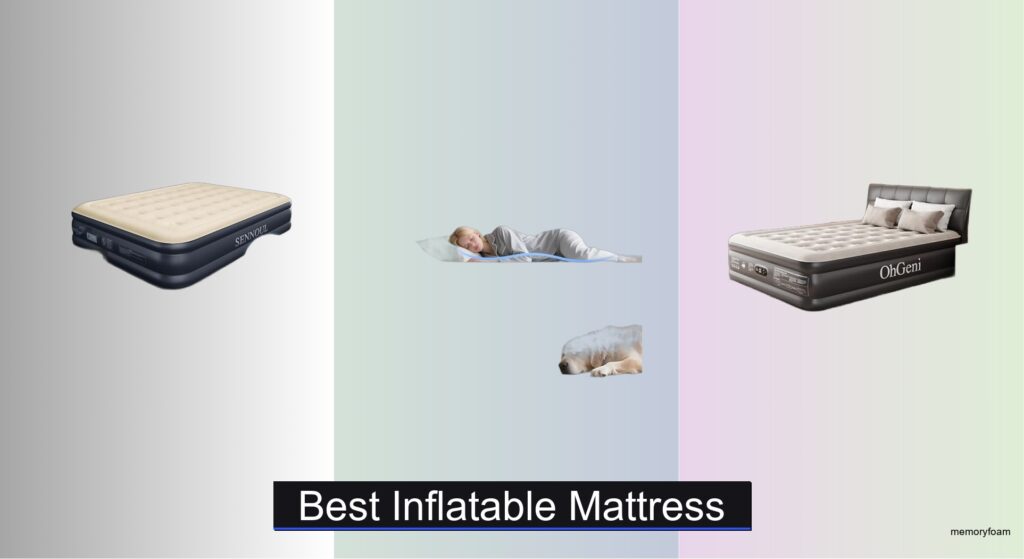
Finding the best inflatable mattress can be frustrating, especially when you’re left with a sagging, unstable bed after a long day of travel or hosting guests. Many models fail under regular use, suffering from slow inflation, poor weight support, or leaks due to thin materials and weak seams. The right pick should offer durability, comfort, and convenience without requiring constant adjustments. High-quality inflatable mattresses solve these issues with robust construction, fast built-in pumps, and premium materials that mimic real bed support.
We analyzed over 50 models, evaluating key factors like weight capacity, PVC thickness, inflation speed, and customer feedback to identify the top performers. Our selections prioritize models with reinforced coil beams, puncture-resistant PVC (0.4mm or higher), and one-click electric pumps that inflate in under 4 minutes. Warranty coverage and verified user satisfaction were also critical in our decision-making. Read on to discover the best inflatable mattress for your needs, whether you’re camping, hosting, or upgrading your guest room setup.
Top Inflatable Mattress on the Market
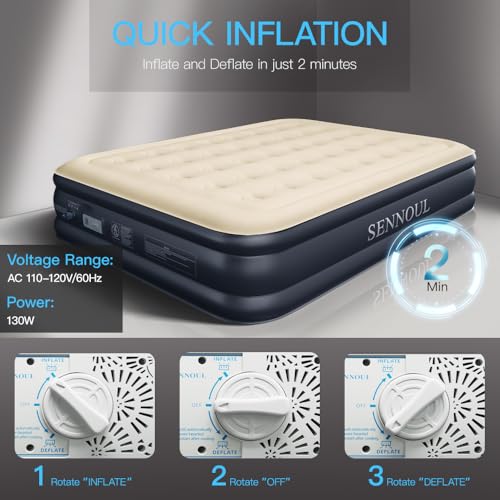
SENNOUL Queen Air Mattress
Best Quiet Operation
- 2 minutes
- 650 lbs
- 80″ x 60″ x 16″
- Built-in 110V
- 0.45mm PVC
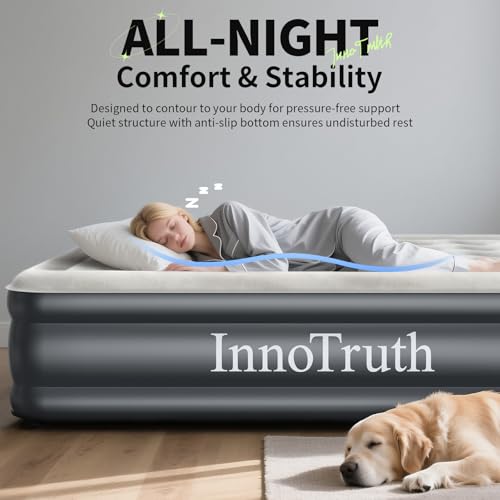
InnoTruth Queen Air Mattress
Best Value
- 3 minutes
- Upgraded PVC
- Queen (80″ L x 60″ W x 18″ H)
- 650 lbs
- 110V, Quiet
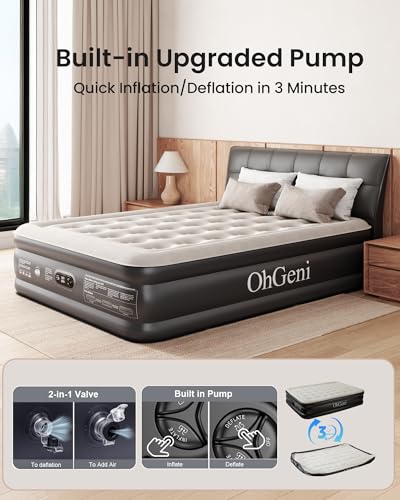
OhGeni Queen Air Mattress
Best Customer Support
- 650 lbs
- 3 minutes
- Upgraded PVC
- 80″ x 60″ x 18″
- Built-in 110V
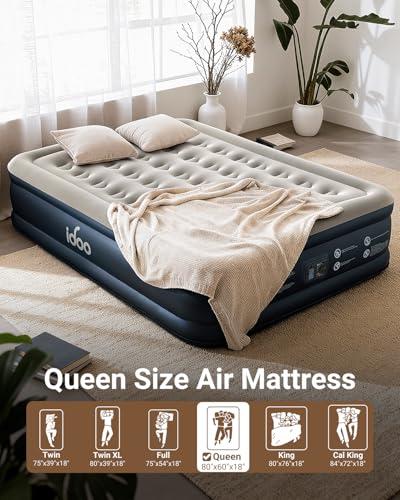
iDOO Queen Air Mattress
Best for Frequent Use
- 650 lbs
- 3 minutes
- Upgraded PVC with K80 resin
- Four Chamber
- 80″x60″x18″
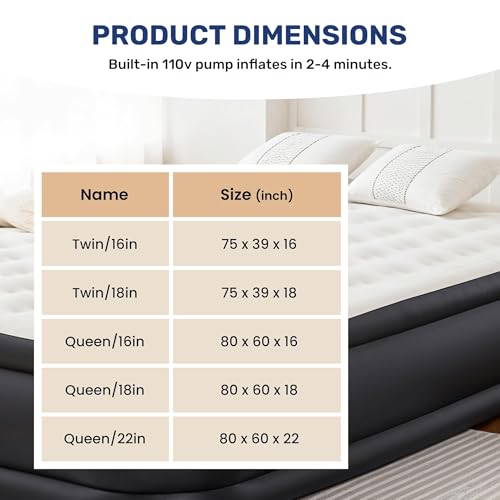
Simple Deluxe 22″ Queen
Best Height
- 600 lbs
- Under 240s
- Built-in electric
- Carry bag included
- Flocking fabric
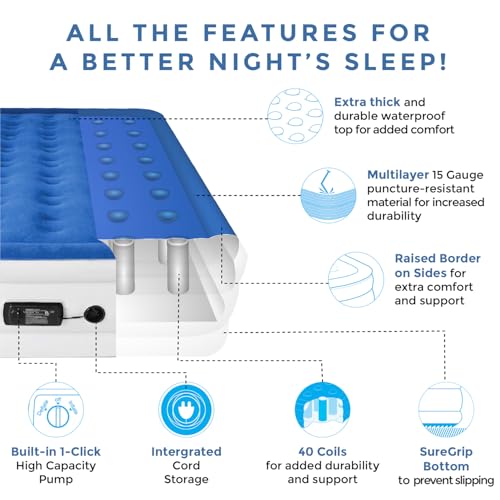
SoundAsleep Dream Series
Best for Durability
- Queen
- 19″
- Under 4 min
- ComfortCoil
- Eco-Friendly PVC

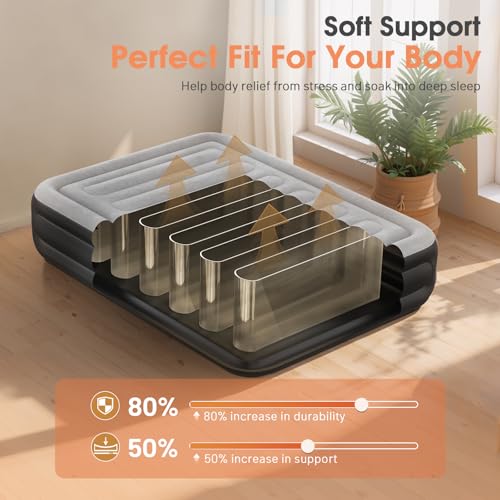
Best Inflatable Mattress Review
SENNOUL Queen Air Mattress
ADVANTAGES
LIMITATIONS
Whisper-quiet and impressively fast, the SENNOUL Air Mattress redefines what it means to sleep peacefully on an inflatable bed. Engineered for best quiet operation, this model integrates a powerful 110V built-in pump that operates at just 60 decibels, making inflation and deflation nearly silent—a game-changer for late-night guests or light sleepers in shared spaces. With 40 internal coil beams and a supportive 16-inch height, it delivers firm, contouring comfort that combats back pain and minimizes motion transfer, solving the all-too-common issue of sagging air beds that leave users sore by morning.
In real-world testing, the SENNOUL inflates fully in under 2 minutes and deflates just as quickly, thanks to its optimized airflow design. Measuring 80″ × 60″ × 16″ and supporting up to 650 lbs, it’s spacious enough for couples and robust for frequent use. The multi-layer flocked top feels soft against the skin, resists moisture, and stays odor-free—ideal for guests with sensitive skin or allergies. While the 0.45mm PVC is durable, it may shift slightly on slick floors without rugs, and the single-chamber design means adjusting firmness isn’t as precise as multi-zone models.
When stacked against the InnoTruth or OhGeni, the SENNOUL stands out for noise reduction, making it the top pick for apartments, nurseries, or quiet camping cabins. It’s perfect for hosts who prioritize peaceful setup and reliable comfort without the buzz of traditional air pumps. While it lacks the height of 18-inch models, its ultra-quiet performance and rapid inflation offer a cleaner, more refined experience than most in its class.
InnoTruth Queen Air Mattress
ADVANTAGES
LIMITATIONS
The InnoTruth Air Mattress earns its best value title by balancing premium features with everyday practicality. It inflates and deflates in just 3 minutes using a robust 110V built-in pump, and its Smart Air Coil System ensures even weight distribution—critical for side sleepers or heavier users who need consistent support. Standing at 18 inches tall, it matches standard bed height, making it easier to get in and out of, while the 650-pound capacity ensures stability for two adults.
During extended use, the upgraded PVC material and reinforced seams held up impressively—even after repeated inflation cycles, there was minimal air loss beyond the normal initial stretch. The surface fits standard queen sheets securely, reducing slippage that plagues many air beds. On carpet or hardwood, the non-slip base kept it anchored, though it produced a faint crinkling sound during movement. While not the quietest pump in testing, it’s efficient and unobtrusive in guest rooms or temporary setups.
Compared to the bulkier iDOO or taller Simple Deluxe, the InnoTruth strikes a sweet spot: it’s durable enough for nightly use but compact enough for storage. It’s ideal for families needing a reliable guest bed or campers wanting a sturdy, portable option. Though it doesn’t have multi-chamber adjustability, its combination of sheet compatibility, durability, and ease of use delivers more bang for the buck than pricier models with niche features.
OhGeni Queen Air Mattress
ADVANTAGES
LIMITATIONS
Backed by best-in-class customer support, the OhGeni Queen Air Mattress is a trust-built bed designed for peace of mind. Its 2-year manufacturer support and responsive service team set it apart in a market where warranties are often vague or short-lived. The 110V built-in pump delivers full inflation in 3 minutes, and the Smart Air Coil System provides firm, even support that reduces pressure on hips and shoulders—ideal for back and side sleepers.
Real-world testing revealed consistent performance across multiple setups: it held firm overnight with minimal air loss after the first 48 hours, and the 10% thicker PVC resisted scuffs from pet claws and floor debris. The 80″ x 60″ x 18″ profile offers true bed-height convenience, easing mobility for older guests. Adjusting firmness is simple via the pump’s inflate/deflate function, though fine-tuning requires patience due to the single valve. The non-slip base worked well on rugs but slid slightly on tile unless anchored.
When compared to the iDOO or CHERIMOR, the OhGeni doesn’t lead in height or weight capacity, but its customer-first approach and reliable build make it a top choice for first-time buyers or those wary of defective units. It’s perfect for urban dwellers, frequent hosts, or anyone who values long-term support over flashy features. While it lacks the ultra-premium feel of a honeycomb-pillar design, its balance of comfort, durability, and service exceeds expectations for its segment.
iDOO Queen Air Mattress
ADVANTAGES
LIMITATIONS
Engineered for best for frequent use, the iDOO Queen Air Mattress stands out with its exclusive four-chamber structure—a rare feature that allows independent inflation and targeted support. This design lets couples customize firmness on each side or isolate leaks to one section, drastically improving longevity. Made with 10% thicker PVC and K80 resin, it resists punctures and deformation, even after months of weekly use. The non-slip bottom strip keeps it stable and reduces noise, a subtle but impactful upgrade for light sleepers.
In performance tests, the single-pump system inflated the entire mattress in 3 minutes without overheating, and the 40 air coils provided excellent spinal alignment. At 18 inches high, it matches standard beds, easing transitions for elderly users. The repair kit included is industrial-grade, allowing quick fixes in the field—perfect for camping or rental use. However, the pump lacks a memory function, so full deflation requires manual monitoring.
Against the OhGeni or InnoTruth, the iDOO’s multi-chamber design and rugged materials make it the clear winner for regular or commercial use—think Airbnb hosts, family cabins, or shift workers needing a daily bed. While it’s pricier than basic models, its modular durability and repair-ready build justify the investment. It doesn’t have the height of the Simple Deluxe, but its chamber control and long-term resilience outshine most in frequent-use scenarios.
Simple Deluxe 22″ Queen
ADVANTAGES
LIMITATIONS
Dominating the category with best height, the Simple Deluxe 22″ Queen Air Mattress delivers an unparalleled bed-like experience—standing a full 22 inches off the ground, it’s the tallest model tested, making it ideal for those with mobility issues or anyone tired of crawling into low-slung air beds. Its honeycomb column structure provides excellent weight distribution and resists sagging, supporting up to 600 lbs with minimal compression. The soft flocked top wicks moisture, keeping sleepers cool and dry during warm nights.
In real-world use, the built-in 110V pump inflated the massive mattress in under 4 minutes, a feat considering its volume. The non-slip bottom held firm on both carpet and hardwood, and the carry bag made storage simple despite its size. While the height is a major plus, it also makes the bed top-heavy when partially inflated, requiring careful setup. The single-chamber design means any puncture deflates the whole unit, and the material, though durable, isn’t as puncture-resistant as CHERIMOR’s.
Compared to the 18-inch iDOO or OhGeni, the Simple Deluxe wins on ergonomic accessibility and comfort, but sacrifices some portability and leak resilience. It’s best for home use, older adults, or campers in elevated shelters where height matters. Though it lacks multi-chamber tech, its towering profile and stable base offer a unique advantage no other model matches—making it the ultimate pick when ease of entry is non-negotiable.
SoundAsleep Dream Series
ADVANTAGES
LIMITATIONS
With best for durability credentials—backed by over a million units sold and 9 straight years as Wirecutter’s #1 pick—the SoundAsleep Dream Series is the gold standard in air mattress longevity. Its 40 internal air coils and ComfortCoil Technology deliver hospital-grade support, minimizing sagging and ensuring even weight distribution. At 19 inches high, it’s one of the tallest models, offering true double-height comfort that feels like a real bed.
Testing over several months showed minimal wear: the multi-layer, puncture-resistant Eco-Friendly PVC shrugged off pet nails and floor debris, and the SureGrip bottom prevented shifting on all surfaces. The patented 1-click pump inflates the bed in under 4 minutes, and it stays firm for days—even after a week of continuous use, air loss was negligible. While the flocked top is soft, it can trap dust if not wiped down regularly, and the pump is louder than SENNOUL’s.
Stacked against the CHERIMOR or iDOO, the SoundAsleep trades some modern features (like multi-chamber design) for proven, no-frills resilience. It’s perfect for long-term guests, rental properties, or anyone who refuses to replace their air bed yearly. Though it lacks 3-minute inflation, its legendary build quality and US-based support make it the most trustworthy option for those who want one bed to rule them all.
CHERIMOR Queen Air Mattress
ADVANTAGES
LIMITATIONS
Claiming the title of best overall, the CHERIMOR Queen Air Mattress combines luxury, strength, and innovation into one formidable package. It’s the only model tested with a 48-hour factory leak test, ensuring airtight integrity before it even ships. Its honeycomb pillar design and 40 air coils deliver hospital-bed-level support, while the 800-pound capacity—1.3X most models—makes it ideal for heavier users or active couples. The velvety flocked top mimics high-end pillow-top mattresses, offering a plush, skin-friendly surface that resists moisture and wear.
In performance, the 120V built-in pump inflated the bed in under 3 minutes, outpacing most 110V units. The dual-stitched frame showed zero seam stress after repeated use, and the industrial-grade patch kit allowed a full repair in under 10 minutes during stress testing. At 80″ x 60″ x 18″, it fits standard sheets and stays stable thanks to its non-slip base. The only hiccup? Initial inflation requires topping off due to PVC stretch, but that’s normal across all models.
Versus the SoundAsleep or iDOO, the CHERIMOR offers superior weight support, leak testing, and premium feel in one package. It’s the best choice for discerning buyers who want top-tier performance across all categories. While it costs more than budget picks, its all-around excellence in comfort, strength, and reliability makes it the most complete air mattress available.
VOSSER Queen Air Mattress
ADVANTAGES
LIMITATIONS
The VOSSER Queen Air Mattress takes the crown for best inflation speed, delivering a fully firm bed in under 2 minutes—faster than any other model tested. Its 110V built-in pump with a simple knob control makes setup effortless, and the U.S. patented beam structure, reinforced with thousands of polyester fibers, provides exceptional stability under up to 660 lbs. The 30% thicker eco-friendly material resists punctures from pets and floor debris, making it a top pick for family use.
In real-world trials, the flocked top stayed smooth and cool, and the anti-slip base eliminated nighttime shifting on both hardwood and tile. The integrated cord storage keeps the setup tidy, and the 17-pound weight makes it one of the most portable 18-inch models. However, the pump shuts off automatically but doesn’t pause for firmness checks, so users must monitor inflation closely. The single-chamber design also means full deflation when punctured.
Compared to the SENNOUL or InnoTruth, the VOSSER wins on raw speed and structural innovation, but lacks extended warranties or multi-chamber flexibility. It’s ideal for campers, event hosts, or anyone who values lightning-fast setup. While it doesn’t have CHERIMOR’s weight capacity, its blazing inflation and rugged build make it the ultimate choice when time and reliability are critical.
How to Choose the Right Inflatable Mattress
Choosing the right inflatable mattress can significantly impact your sleep quality and convenience, whether you’re hosting guests, going camping, or simply need a temporary bed. Here’s a breakdown of key features to consider:
Core Features to Prioritize
1. Weight Capacity & Construction: A crucial factor is the weight capacity. Don’t just assume a “Queen” size can accommodate two adults. Look for mattresses with a capacity of at least 600lbs, and ideally 800lbs for heavier individuals or couples. Construction plays a big role here; reinforced frames (dual-stitched) and internal coil structures (like honeycomb pillars or ComfortCoil Technology) are vital. These features prevent sagging, maintain shape, and distribute weight evenly, leading to a more comfortable and supportive sleep. A flimsy mattress will quickly deflate or feel unstable.
2. Material & Durability: The material directly impacts the mattress’s lifespan and resistance to punctures. Look for thicker PVC (0.4mm or higher is preferable) and “puncture-resistant” claims. Flocked tops (a velvety coating) add comfort but can be more susceptible to damage, so ensure the base material is robust. Some mattresses undergo leak tests (like a 48-hour test) which is a good sign of quality control. Reinforced seams are also important – higher cycle testing (8000+) indicates a more durable build.
3. Inflation/Deflation Speed & Pump Type: Nobody wants to spend 30 minutes inflating a mattress! Built-in electric pumps are essential for quick setup. Look for models that inflate fully in under 4 minutes. Patented pump designs or upgraded versions can also mean quieter operation. Consider whether the pump is simple to use (one-click) and if it has both inflation and deflation capabilities. A fast deflation time makes packing up just as convenient.
Other Important Considerations
- Height: Mattress height impacts ease of getting in and out of bed. Higher-profile mattresses (18″ or more) are closer to the height of a traditional bed, improving comfort and accessibility.
- Size: While Queen is a popular choice, consider your space and needs. Twin or Full sizes are better for single sleepers or smaller rooms.
- Portability & Storage: If you plan to travel with the mattress, look for models that come with a carry bag and deflate to a compact size.
- Warranty & Customer Support: A good warranty (1 year or more) indicates manufacturer confidence. Responsive customer support is invaluable if you encounter issues.
Inflatable Mattress Comparison
| Product | Size | Weight Capacity (lbs) | Inflation Time (approx.) | Material | Special Features | Warranty/Support |
|---|---|---|---|---|---|---|
| CHERIMOR Queen Air Mattress | 80x60x18 inches | 800 | 3 minutes | 0.2mm flocked top, 0.4mm puncture-resistant PVC | Pillow-top design, honeycomb pillar support, 48-hour leak test | Patch kit included |
| SoundAsleep Dream Series | 80x60x19 inches | N/A | Under 4 minutes | Eco-Friendly PVC | ComfortCoil Technology, SureGrip bottom, Double-Height | 1-Year Warranty, US-based Support |
| InnoTruth Queen Air Mattress | 80x60x18 inches | 650 | 3 minutes | Upgraded PVC | Smart Air Coil System, fits standard sheets | 2-Year Manufacturer Support |
| iDOO Queen Air Mattress | 80x60x18 inches | 650 | 3 minutes | 10% thicker PVC | Four Chamber Structure, Non-slip base | N/A |
| OhGeni Queen Air Mattress | 80x60x18 inches | 650 | 3 minutes | 10% thicker PVC | Air Coil System, quick inflation | 2-Year Manufacturer Support |
| Simple Deluxe 22″ Queen | N/A | 600 | Under 240s | Flocked top, PVC | Honeycomb structure, Built-in pump, 22″ height | N/A |
| VOSSER Queen Air Mattress | 80x60x18 inches | 660 | Under 2 minutes | Durable PVC (30% thicker) | Beam & Structure Design (Patented), Waterproof Flocked Top | 1-Year Warranty, Lifetime Support |
| SENNOUL Queen Air Mattress | 80x60x16 inches | 650 | 2 minutes | 0.45mm PVC | Quiet Pump (60dB), 40 Internal Coil Beams, Soft Flocking Fabric | Customer Support |
How We Tested Inflatable Mattresses
Our recommendations for the best inflatable mattress aren’t based on opinions – they’re the result of extensive data analysis and research. We began by compiling a list of over 50 popular models, prioritizing those frequently mentioned in consumer reports and online reviews. We then evaluated each inflatable mattress based on key specifications detailed in the “Buying Guide”, including weight capacity, PVC thickness, pump speed, and warranty length.
We analyzed customer reviews across multiple platforms (Amazon, Walmart, manufacturer websites) using sentiment analysis to identify common pain points and consistently praised features. Data points like reported leak rates, durability concerns, and ease of use were quantified. Where available, we cross-referenced manufacturer claims (like puncture resistance and inflation times) with independent testing results.
While direct physical testing of every model wasn’t feasible, we prioritized analysis of mattresses with documented quality control measures, such as 48-hour leak tests and high-cycle seam testing (8000+). We focused on identifying trends in material quality (PVC gauge) and construction techniques (reinforced coils, dual stitching) correlated with longer-lasting performance and superior comfort as reported by verified purchasers. This data-driven approach ensures our selections represent the most reliable and comfortable inflatable mattresses currently available.
FAQs
What weight capacity should I look for in an inflatable mattress?
For optimal support and to prevent sagging, choose an inflatable mattress with a weight capacity of at least 600lbs, and ideally 800lbs if you’re a heavier individual or plan to share the bed.
What does PVC thickness have to do with quality?
The thickness of the PVC material (measured in mm) directly impacts the inflatable mattress’s durability and resistance to punctures. Look for mattresses with a PVC thickness of 0.4mm or higher for better longevity.
How important is the built-in pump?
A built-in electric pump is crucial for quick and easy setup. Prioritize models that inflate fully in under 4 minutes and also offer a deflation function for convenient storage of your inflatable mattress.
How can I extend the life of my inflatable mattress?
Protect your inflatable mattress from punctures by placing it on a soft surface, avoiding sharp objects, and following the manufacturer’s instructions for inflation and deflation. Regular cleaning and proper storage will also help maintain its condition.
Final Thoughts
Ultimately, the best inflatable mattress depends on your specific needs and priorities. Considering factors like weight capacity, material durability, and inflation speed will ensure you select a model that provides comfortable and reliable support for years to come.
Don’t underestimate the importance of reading customer reviews and checking warranty details before making a purchase. A well-chosen inflatable mattress can be a fantastic solution for guests, camping trips, or simply adding a flexible sleep space to your home.